
Whether you are recovering from a rotator cuff repair, a labrum procedure, an arthroscopic intervention, or a shoulder replacement, the goal is the same: less pain and better function. However, like any surgical procedure, shoulder surgery problems and complications can occur. Understanding the risks before your operation may help you make more informed decisions, prepare your body, and take an active role in recovery. This post covers the complications patients may face across a range of shoulder surgeries, explains one of the most significant long-term challenges in total shoulder replacement, and highlights newer technology designed to reduce that risk.
Key Takeaways
- Shoulder surgery problems can affect any procedure, from arthroscopic repairs to full joint replacements.
- Common complications include infection, stiffness, nerve issues, re-tears, and implant loosening, though most are relatively uncommon.
- In total shoulder replacement, glenoid component loosening is one of the most common causes of revision surgery. Newer implant designs aim to address this common complication.
Types of Shoulder Surgery and When They Are Recommended
The shoulder is one of the most mobile and complex joints in the body. Its ball-and-socket design allows movement in nearly every direction, but that mobility comes at a cost. The joint relies heavily on soft tissue structures like the rotator cuff, labrum, and surrounding ligaments to stay stable. When those structures are damaged, or when arthritis erodes the joint surfaces, surgery may become necessary.
The following are some common forms of shoulder surgery:
Arthroscopic shoulder surgery is a minimally invasive approach often used to treat rotator cuff tears, labral tears, impingement, and loose bodies within the joint. The surgeon works through small incisions using a camera and specialized instruments. Recovery tends to be faster than open surgery, but complications like stiffness, infection, and re-tears can still occur.
Rotator cuff repair can be performed arthroscopically or through an open incision. The procedure reattaches the torn tendon to the bone. One of the more common shoulder surgery problems after this procedure is a re-tear of the repaired tendon.
Labrum repair (including SLAP and Bankart repairs) addresses tears to the ring of cartilage that stabilizes the shoulder socket. Stiffness and limited range of motion tend to be the most frequent concerns during recovery. In some cases, patients may experience recurrent instability if the repair does not hold.
Total and reverse shoulder replacement are more extensive procedures reserved for severe arthritis, irreparable rotator cuff damage, or complex fractures. These surgeries replace damaged joint surfaces with prosthetic components. While outcomes are generally positive, long-term complications like implant loosening deserve careful attention.
Common Shoulder Surgery Problems Across All Procedures
Regardless of which shoulder procedure you undergo, certain complications can arise. Some are minor and resolve with time. Others may require additional treatment or a follow-up surgery. Being aware of these risks can help you prepare mentally and practically.
- Infection: Any surgical procedure carries some risk of infection. Signs may include redness, warmth, swelling, or drainage at the incision site. Most infections respond to antibiotics, but more serious cases may require intervention.
- Stiffness and frozen shoulder: Scar tissue may form during the healing process, limiting your range of motion. Consistent physical therapy is often an effective way to address it.
- Nerve or blood vessel damage: While uncommon, nearby nerves and blood vessels can be affected during surgery. Symptoms might include numbness, tingling, or weakness in the arm.
- Re-tear or repair failure: In rotator cuff and labrum surgeries, the repaired tissue can sometimes fail to heal or tear again. Factors like tear size, tissue quality, and rehabilitation compliance may influence this risk.
- Blood clots: Though less common with shoulder surgery than hip or knee procedures, blood clots remain a possibility.
- Anesthesia-related complications: Nausea, dizziness, and vomiting can occur after general anesthesia. These tend to resolve quickly but should be reported to your care team.
Most of these shoulder surgery problems are relatively rare, and your surgical team will take steps to minimize them. Still, understanding what could happen gives you a better foundation for your recovery.
Shoulder Replacement: Additional Concerns to Understand
Total and reverse shoulder replacement surgeries come with their own specific set of considerations on top of the general risks above. Because these procedures involve implanting prosthetic components, longevity and mechanical stability become important factors.
Glenoid Loosening: The Leading Cause of Revision Shoulder Replacement
The glenoid is the socket side of your shoulder joint. In a total shoulder replacement, a prosthetic glenoid component creates a new, smooth surface for the ball of the humerus to move against. Over time, this component can become unstable.
When the glenoid loosens, you may notice renewed pain. Some patients experience decreased motion or mechanical symptoms like clicking and clunking. If loosening becomes severe, a revision surgery may be necessary to address it.
In anatomic total shoulder arthroplasty, glenoid component loosening has been identified as one of the most common reasons patients require revision surgery. Traditional glenoid implants sit on top of the glenoid bone surface. This positioning can create stress at the bone-implant interface that accumulates over years of use. That ongoing stress may gradually contribute to loosening. The challenge has pushed researchers and implant designers to develop better solutions.
How Modern Implant Systems Aim to Combat Glenoid Loosening
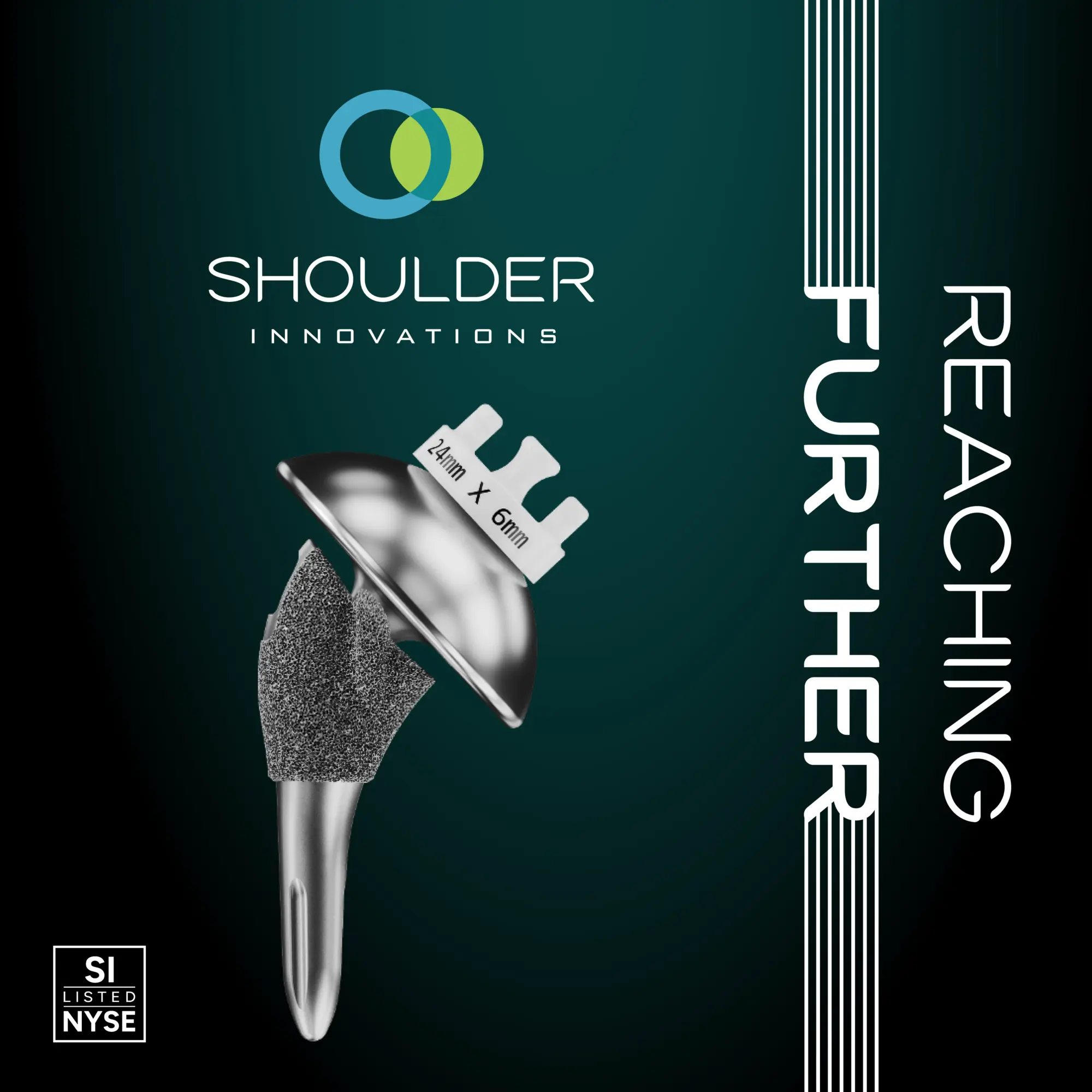
Shoulder Innovations developed the InSet® Shoulder System with glenoid stability as a primary focus. Rather than placing the glenoid component on top of the bone surface, the InSet® glenoid implant is designed to sit within the strongest supportive bone of the glenoid. This fundamental design difference may reduce the stress that contributes to loosening over time. According to biomechanical testing data, stress on the InSet® glenoid implant may be reduced by as much as 87% compared to traditional glenoid designs.
The system also features titanium alloy humeral stems with curved fins coated in a rough, bone-friendly material that promotes bony ingrowth. This design is intended to promote secure fixation and stability of the humeral component. When both sides of the replacement remain stable, the overall longevity of the joint may improve. The system is also engineered with bone preservation in mind. By conserving more natural bone during the initial surgery, it may provide stronger support if a revision is ever needed.
Additionally, the system is supported by ProVoyance®, a 3D planning tool. Your surgeon can convert a CT scan into a three-dimensional model of your shoulder bones, then determine the ideal implant type, size, and positioning before the procedure even begins. More precise implant placement is intended to optimize joint mechanics.
Steps You Can Take to Reduce Your Risk of Shoulder Surgery Problems
Your surgeon plays a key role in your outcome, but you have influence over your results, too. These steps apply whether you are having an arthroscopic repair or a full joint replacement.
Choose an Experienced Shoulder Specialist
Not all orthopedic surgeons focus on the shoulder. Look for a board-certified shoulder surgeon whose practice centers on shoulder procedures. Ask your surgeon which technique and implant system they plan to use and why. If you are having a shoulder replacement, learn about the design features that address long-term durability and glenoid loosening. Understanding your procedure helps you become an active participant in your care rather than a passive one.
Commit to Your Rehabilitation
Physical therapy is often one of the most important factors in a successful outcome across all types of shoulder surgery. Skipping sessions or cutting your program short can increase your risk of stiffness, weakness, and other shoulder surgery problems. Communicate openly with your therapist about any pain or concerns along the way.
Prepare Before Surgery
Your preoperative health matters. If you smoke, your surgeon will likely ask you to stop well in advance. Smoking has been shown to increase the risk of postoperative complications. You may also be asked to perform preparatory exercises, limit alcohol, and review all medications with your surgical team. Preparing your home for recovery, including arranging for someone to drive you home and stay with you for the first few days, stocking easy-to-prepare meals, and wearing loose clothing that is simple to put on with one arm, can also make a real difference in your comfort level during those early weeks.
Communicate Openly with Your Surgical Team
Do not hesitate to voice concerns before, during, or after your recovery. A strong relationship with your surgeon and their staff can help you feel more confident going into the procedure and more prepared for what comes next. If something feels off during recovery, speak up early. Early intervention can sometimes prevent a minor issue from becoming a larger one.
Summary
Shoulder surgery problems are a consideration across every type of shoulder procedure, from arthroscopic repairs to full joint replacements. While most complications are relatively uncommon, understanding them ahead of time can help you prepare, ask better questions, and take meaningful steps to protect your results.
Your role in the process matters just as much as the technology your surgeon uses. Choosing a dedicated shoulder specialist, committing to rehabilitation, preparing your body, and communicating openly with your surgical team can all contribute to a better outcome. No procedure is entirely without risk, but being proactive and informed tends to put patients in the best position for long-term relief and restored function.
Frequently Asked Questions
What are the most common shoulder surgery problems?
Common shoulder surgery problems may include infection, stiffness, nerve issues, re-tears of repaired tissue, implant loosening, dislocation, and component wear. The specific risks depend on the type of surgery you are having. Most complications are relatively uncommon, but understanding them helps you prepare.
Is stiffness after shoulder surgery normal?
Some degree of stiffness is common after many types of shoulder surgery, particularly rotator cuff and labrum repairs. Consistent physical therapy is generally the most effective way to address it. If stiffness persists beyond what your surgeon considers typical, additional treatment options may be available.
What is glenoid loosening, and why does it matter?
Glenoid loosening occurs when the socket-side implant in a total shoulder replacement becomes unstable over time. It is considered the most common reason patients need a revision shoulder surgery. Symptoms may include renewed pain, decreased motion, or clicking and clunking in the shoulder.