
Medically reviewed by Mark A. Schrumpf, MD | Reviewed May 2026
One of the questions I hear most often from patients considering surgery is, “How long does a shoulder replacement last?” The straightforward answer is that implant longevity varies from person to person, but there are some factors that may influence longevity. In this post, I want to walk you through what the available evidence suggests about implant lifespan, the factors that can influence how long your replacement holds up, and the steps you can take to help protect it for the long run.
Key Takeaways
- Both total shoulder replacement and reverse shoulder replacement are designed for durability, but each has unique longevity considerations.
- Activity level, body weight, age at the time of surgery, and bone quality may all influence how long an implant lasts.
- Following your surgeon’s post-operative guidelines, particularly around activity restrictions, can make a difference in long-term implant performance.
What Does “Lasting” Actually Mean?
Before jumping into timelines, it helps to clarify what we mean when we talk about how long a shoulder replacement lasts. In orthopedic medicine, implant longevity is typically measured by what we call a survival rate, or the percentage of implants that remain functional and in place without requiring revision surgery over a given period. When an implant is said to have “failed,” that generally refers to loosening, significant wear, or pain severe enough to warrant a second operation.
By this measure, shoulder replacements tend to perform quite well. Many patients go 10 or more years without needing any revision. That said, no implant lasts forever. How long your shoulder replacement lasts will depend on a combination of the implant itself, your anatomy, your lifestyle, and how closely you follow through on your post-operative care.
How Long Do Shoulder Replacements Typically Last?
The data available on shoulder replacement longevity is encouraging. Research on anatomic total shoulder arthroplasty has reported survival rates in the range of approximately 85 to 95 percent at 10 years in well-selected patients. That means many people who undergo this procedure are still doing well with their original implant a decade later.
These are population-level numbers. They can give you a general sense of what to expect, but they do not tell you exactly how long your specific implant will last. Your age, activity level, anatomy, and overall health all play into that equation in ways that are unique to you.
Implant Design Has Come a Long Way
Shoulder implant technology has improved considerably over the past two decades. Better materials, more refined surgical techniques, and advances in implant design have all contributed to more reliable, longer-lasting outcomes. One example of this progress is the InSet® Shoulder System by Shoulder Innovations, which I frequently use in my practice.
For total shoulder replacement, the InSet® Glenoid component takes a different approach than traditional designs. Rather than sitting on top of the glenoid surface, it is positioned within the strongest supporting bone of the socket. That distinction matters more than it might sound. Testing has suggested that this placement may reduce stress on the glenoid component by as much as 87% compared to traditional glenoid implants, and reducing that stress is a factor in preventing the loosening that may lead to revision surgery.
For reverse shoulder replacement, the InSet® Reverse System uses a lateralized glenoid and humeral construct. This design is intended to support post-operative function and range of motion by more closely replicating the mechanics of a natural shoulder.
Surgical planning also plays a meaningful role. The InSet® System is supported by ProVoyance®, a 3D planning software that converts a CT scan into a virtual model of your shoulder. This allows for precise implant sizing and positioning before surgery begins.
Total Shoulder vs. Reverse Shoulder: Are There Differences in Longevity?
This is a question I get often, and the answer is more nuanced than a simple yes or no.
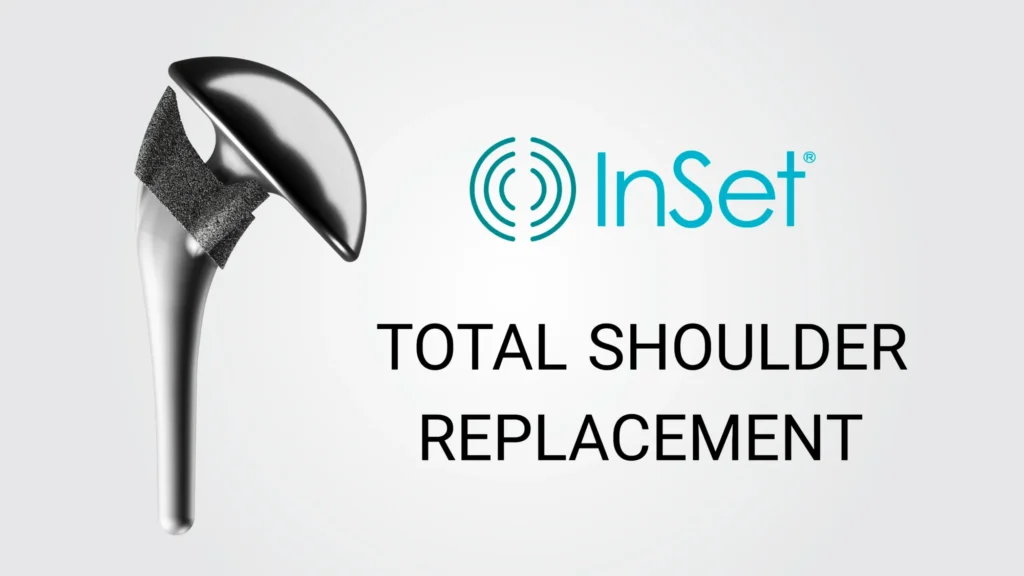
Total shoulder replacement replaces the damaged ball of the upper arm bone with a metal component and lines the socket with a smooth plastic cup. This approach aims to recreate the natural mechanics of the shoulder. It works best when the rotator cuff is intact and functional, because the rotator cuff plays an important role in centering the joint during movement. Over time, the plastic socket component can be one of the more vulnerable parts of the implant. Loosening or wear of the glenoid component is among the more common reasons for revision in anatomic replacements.
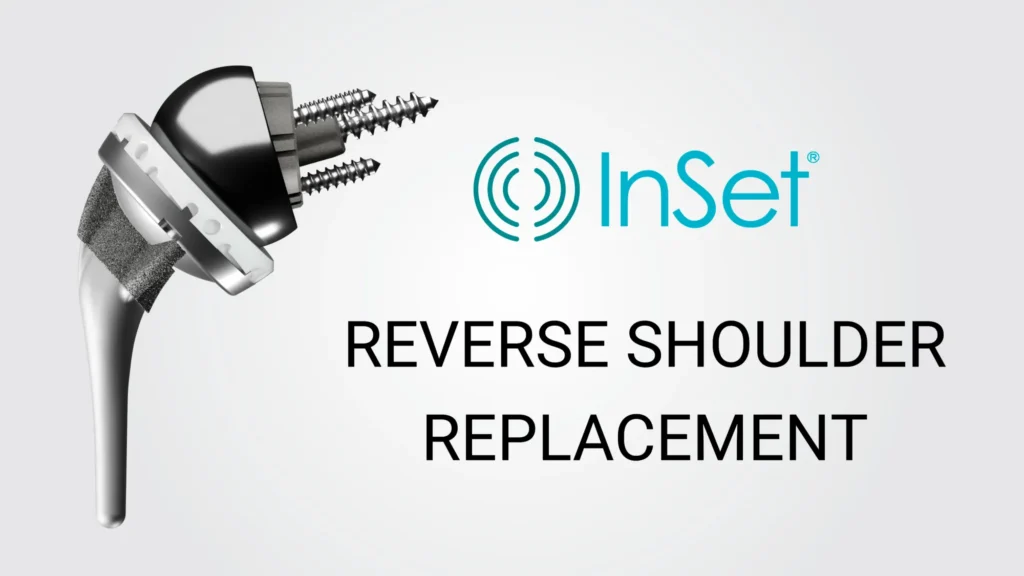
Reverse shoulder replacement takes a fundamentally different approach. It reverses the ball and socket so that a metal ball attaches to the shoulder blade and a plastic socket cups the top of the arm bone. This shifts the mechanical load to the deltoid muscle, bypassing the damaged rotator cuff entirely. Because of this design, reverse replacements can offer certain stability advantages, particularly in patients with cuff tear arthropathy or complex fractures.
In short, both procedures can provide durable results, but the best option for you depends on your specific anatomy, diagnosis, and goals. That determination is something we work through together during your consultation.
Factors That May Affect How Long Your Shoulder Replacement Lasts
Not all shoulder replacements follow the same longevity trajectory. Several factors can influence how long a shoulder replacement lasts in a given patient, and understanding them can help you make informed choices about your care.
Age at the Time of Surgery
Younger patients are generally more active and place more physical demand on an implant over their lifetime. Someone who has surgery at 55 may put considerably more cumulative wear on an implant than someone who has surgery at 75. This does not automatically mean younger patients should delay surgery when it is clearly warranted, as the relief and quality-of-life benefits are real and meaningful at any age. It does, however, mean that younger patients may face a higher statistical likelihood of eventually needing a revision.
Activity Level and Physical Demands
This is one of the most influential and controllable factors. High-impact activities (heavy overhead lifting, contact sports, repetitive loading) can accelerate wear on the implant over time. I advise most shoulder replacement patients to avoid these types of demands on the joint. Lower-impact activities, such as swimming, walking, cycling, and recreational golf, are much more joint-friendly and are often very achievable after a full recovery. Every patient’s situation is a bit different, and we will work through what makes sense for your lifestyle specifically.
Bone Quality
The quality of the bone surrounding the implant plays a role in how well the implant integrates and stays stable over time. Conditions like osteoporosis can affect the bone’s ability to hold the implant securely. This is something your care team evaluates carefully during pre-operative planning, and it can influence both the surgical approach and the implant choice.
Adherence to Post-Operative Guidelines
Following your post-operative instructions is one of the most direct ways to protect your new shoulder. This includes wearing your sling as directed during the early healing phase, attending physical therapy consistently, and respecting the activity restrictions your surgical team puts in place. The rehabilitation process helps build the muscle support your implant needs to function well long-term. Patients who push too hard too early, or who resume high-impact activities before the joint has fully healed, may be placing unnecessary stress on a shoulder that is still settling in.
Signs That Something May Be Off
Many patients will go many years without any problems. I always encourage my patients to stay aware of any changes and reach out early if something doesn’t feel right.
Symptoms that may be worth a conversation with your surgeon include:
- New or worsening shoulder pain
- A feeling of looseness or instability in the joint
- A noticeable decrease in range of motion or strength compared to your previous peak
- Swelling or warmth around the shoulder area
None of these symptoms automatically mean something is seriously wrong, but they are all signs worth raising with your care team sooner rather than later.
What About Revision Surgery?
Revision shoulder replacement may be performed when an implant needs to be repaired or replaced due to loosening, wear, instability, infection, or other complications. For many patients, revision procedures are available, and many patients achieve meaningful improvements through them. That said, revision surgery is generally more involved than the original procedure. It typically requires more surgical time, carries a somewhat greater degree of complexity, and may involve a more demanding recovery.
Steps You Can Take to Help Your Implant Last
The encouraging news is that there are real, actionable things you can do to support the longevity of your shoulder replacement.
- Commit to your rehabilitation program. Physical therapy is foundational, not optional. Strengthening the muscles around the shoulder, especially the deltoid and the remaining rotator cuff tissues, helps protect the implant from abnormal stresses during daily use.
- Keep up with your follow-up appointments. Regular check-ins with your surgeon allow periodic imaging to monitor the implant over time. Catching a small issue early is always better than addressing a larger one later.
- Protect the joint from high-impact loading. Avoid activities that place excessive force through the shoulder, particularly in the years following surgery. If you are unsure whether a specific activity is safe, ask your surgeon before resuming it.
- Maintain a healthy lifestyle. Appropriate body weight, good nutrition, and adequate rest all support tissue quality and healing.
- Report new symptoms early. If something feels different or uncomfortable, contact your surgeon’s office.
Summary
How long does a shoulder replacement last? Modern implant designs and refined surgical techniques have improved the durability of shoulder replacements. However, longevity is not purely a product of the hardware. It is also shaped by your age, activity level, bone quality, and how closely you follow through on post-operative care. My goal for every patient is to help them get the longest, most comfortable use out of their new shoulder possible. That starts with careful surgical planning and extends through a dedicated commitment to rehabilitation and long-term follow-up.
If you have questions about whether shoulder replacement is right for you, or if you would like to understand more about what to expect, I encourage you to schedule a consultation with my office.
Frequently Asked Questions
Can I return to sports after shoulder replacement?
Many patients are able to return to lower-impact activities like swimming, golf, walking, and recreational cycling. High-impact or contact sports are generally not recommended after shoulder replacement, as they can accelerate implant wear and potentially shorten its lifespan. Every patient’s situation is different, and your surgeon will work with you to develop a plan for returning to the activities that matter most to you.
How do I know if my implant is failing?
Signs that may suggest a problem include new or worsening shoulder pain, a sensation of looseness or instability, decreased range of motion compared to your previous peak, or swelling and redness around the joint. If you notice any of these, reach out to your surgeon’s office.
How often should I see my surgeon after shoulder replacement?
Follow-up schedules vary by surgeon and by patient, but regular check-ins are generally recommended, especially during the first one to two years after surgery, and periodically after that. Staying current with your follow-up care is one of the simplest and most effective things you can do to protect your long-term outcome.