
Medically reviewed by Mark A. Schrumpf, MD | Reviewed August 2026
When patients ask whether a shoulder replacement can be revised, my answer is usually yes, but the decision depends on why the original implant is no longer working as expected. Revision shoulder replacement is a well-established procedure, but it’s also more complex than a primary shoulder replacement and requires careful planning. In this post, I’ll explain when revision surgery may be appropriate, what the process typically involves, and how I approach maximizing the lifespan of a shoulder replacement.
Key Takeaways
- Revision shoulder replacement is a secondary surgery performed when a prior shoulder replacement is no longer functioning well.
- Common reasons for revision include implant loosening, instability, infection, or wear of the components over time.
- Revision surgery is generally more complex than a first-time replacement and often requires more extensive planning.
- Implant and technique choices made during the original surgery can influence how straightforward a future revision might be, if one is ever needed.
What Revision Shoulder Replacement Actually Means
Revision shoulder replacement refers to a second surgery on a shoulder that has already had a total or reverse replacement. Rather than a brand-new joint replacement, it typically involves removing some or all of the original implant components. New ones are then placed. Depending on the reason for revision, I may also need to address bone loss, scar tissue, or soft tissue damage that has developed since the first surgery.
It’s a different kind of operation than the original replacement. The anatomy has already been altered once. The surgeon is usually working with less healthy bone and more scar tissue than existed the first time around.
Why a Shoulder Replacement Might Need to Be Revised
Many shoulder replacements perform well for years. Most patients never need a second surgery. Revision becomes a consideration when specific problems develop, such as:
- Implant loosening, where the bond between the implant and the bone weakens over time.
- Instability, particularly in reverse shoulder replacements, where the ball and socket components no longer track together the way they should.
- Infection, which can develop shortly after surgery or, less commonly, years later.
- Rotator cuff failure following a total shoulder replacement, which can change the joint’s mechanics enough to require conversion to a reverse design.
- Fracture around the implant, often from a fall or other trauma well after the original surgery.
Pain that returns after a period of feeling well is worth taking seriously. So is new stiffness or a sense of instability. A noticeable decline in function is a reason to get evaluated rather than waiting things out.
How Revision Surgery Differs From the Original Procedure
The surgical approach for a revision depends heavily on why the original total shoulder replacement or reverse shoulder replacement is failing. In some cases, only one component needs to be exchanged. In others, especially where there’s significant bone loss around the glenoid, the surgery becomes considerably more involved. It may require bone grafting or specialized implants designed for compromised bone.
A rotator cuff that failed after an anatomic total shoulder replacement is another reason I see patients need revision. In that scenario, converting to a reverse shoulder replacement is often the more reliable path forward. The reverse design doesn’t depend on a functioning rotator cuff the way the original anatomic design does.
Revision surgery tends to take longer than a first-time replacement. It generally carries a somewhat higher level of surgical complexity. That doesn’t mean it isn’t worth pursuing. For the right patient, it may restore meaningful pain relief and function even after a prior implant has failed.
Because revision cases involve more variables than a first-time replacement, who performs the surgery matters. Dedicated training tends to make a real difference in revision cases, where a surgeon often has to work around unfamiliar anatomy, prior hardware, and bone loss that a general orthopedic surgeon may not encounter as often. If you’re facing a possible revision, I’d encourage you to ask your surgeon directly about their specific experience with revision shoulder arthroplasty, not just shoulder replacement in general.
Why Bone Preservation Matters Even at the First Surgery
One thing I try to explain to patients considering their first shoulder replacement is that decisions made during that initial surgery can matter later. They can affect what’s possible years down the road, if a revision is ever needed. Preserving as much healthy native bone as possible during the original procedure gives a surgeon more to work with later. That could be decades away, or, less commonly, sooner than expected.
This is part of why implant and technique selection matters to me beyond just the immediate outcome. A glenoid implant that removes less bone during placement can make a meaningful difference if a patient’s shoulder ever needs a second look. The same is true of a humeral component designed with future flexibility in mind. This is one of the reasons I use the InSet® Total Shoulder and InSet® Reverse Shoulder systems from Shoulder Innovations, which prioritize this bone-preservation philosophy in their designs.
What I See in My Patients
The revision conversations I have are almost always harder than the ones about a first-time replacement. Patients often feel discouraged that the surgery they already went through didn’t hold up the way they expected. I try to reframe that early. A revision isn’t a failure on the patient’s part, and in a lot of cases it isn’t a failure on anyone’s part. Implants are mechanical devices, and mechanical devices can wear or loosen over long enough time spans, particularly in patients who remained active for years afterward.
I’ve also noticed that patients who come in early, as soon as something starts to feel off, tend to have more options available to them. Patients who wait a long time, hoping the problem resolves on its own, often have fewer choices by the time they’re seen. Bone loss and soft tissue damage generally get worse the longer a failing implant is left in place.
My Approach to Reducing the Chance of Future Revision
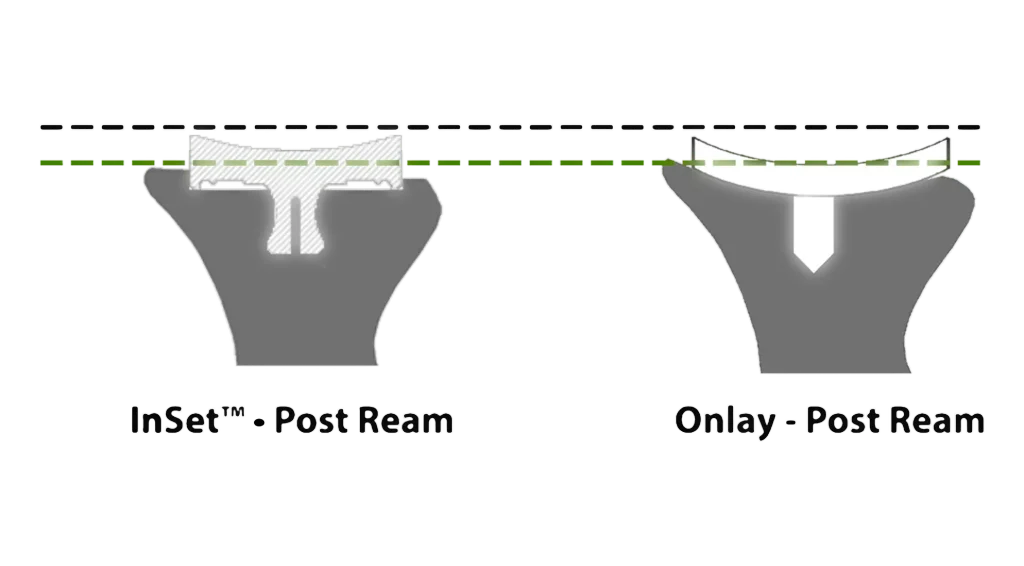
Because I think about long-term durability from the very first surgery, not just the years immediately after, implant selection matters to me. I use the InSet® Glenoid for many of my total shoulder replacement patients. It’s designed to sit within a pocket of native bone rather than resting on top of it. That design is intended to reduce micro-motion at the bone-implant interface, one of the mechanical issues that can contribute to glenoid loosening over time.
I also utilize ProVoyance® 3D surgical planning software before many of my cases. It lets me map out implant positioning against a patient’s specific anatomy ahead of time, rather than relying solely on judgment made in the operating room. My honest opinion is that thoughtful planning at the outset does more to protect a patient’s long-term outcome than almost anything I can do after a problem has already developed.
What Patients Can Do to Support Their Implant’s Longevity
While implant design and surgical technique play a key role in how long a shoulder replacement lasts, patients aren’t passive in this process. There are a few things within your control that may help protect your results over time:
- Stay consistent with physical therapy, both early in recovery and with any longer-term maintenance exercises your therapist recommends.
- Avoid repetitive heavy lifting or high-impact activities that load the shoulder joint beyond what it was designed for.
- Keep up with your scheduled follow-up visits and any recommended imaging, even once your shoulder feels back to normal. Early signs of loosening or wear are often easier to address than problems caught late.
- Manage your overall health, including bone density and any conditions like osteoporosis, since bone quality affects how well an implant stays fixed over time.
None of this guarantees a shoulder replacement will last a lifetime, but patients who stay engaged in these habits tend to do well over the long run. If anything starts to feel wrong, don’t hesitate to reach out. It’s always better to have something checked and find out it’s nothing than to wait and let a small problem turn into a bigger one.
Summary
Shoulder replacement can generally be revised when a prior implant loosens, becomes unstable, gets infected, or otherwise stops functioning the way it should. Revision surgery is more complex than a first-time replacement, and the approach depends heavily on what caused the original implant to fail. Even so, it remains a well-established option for restoring function and relieving pain. If your shoulder replacement no longer feels the way it used to, or you want to understand how implant choice affects how long a shoulder replacement lasts in the first place, the right next step is a dedicated evaluation.
You can schedule an evaluation to discuss your specific shoulder and whether revision surgery may be appropriate for you.
Frequently Asked Questions
How do I know if my shoulder replacement needs to be revised?
New or returning pain, a feeling of instability, decreased range of motion, or a noticeable change in function after a period of doing well are all reasons to schedule an evaluation. Imaging is typically needed to determine what’s actually happening at the implant.
Is revision shoulder replacement riskier than the original surgery?
Revision surgery is generally more complex and can carry a somewhat higher level of risk than a first-time replacement. This is largely due to scar tissue, altered anatomy, and sometimes reduced bone quality. Your surgeon can walk you through the specific considerations for your case.
Can a total shoulder replacement be revised into a reverse shoulder replacement?
Yes, this is one of the more common types of revision. When the rotator cuff fails after an anatomic total shoulder replacement, converting to a reverse design can often restore function more reliably than repairing the original construct.
Will I need physical therapy again after a revision surgery?
Yes. Revision shoulder replacement generally requires a rehabilitation process similar to, and sometimes more gradual than, the one following an initial replacement. Your surgeon and physical therapist will build a plan specific to what was addressed during your revision.