
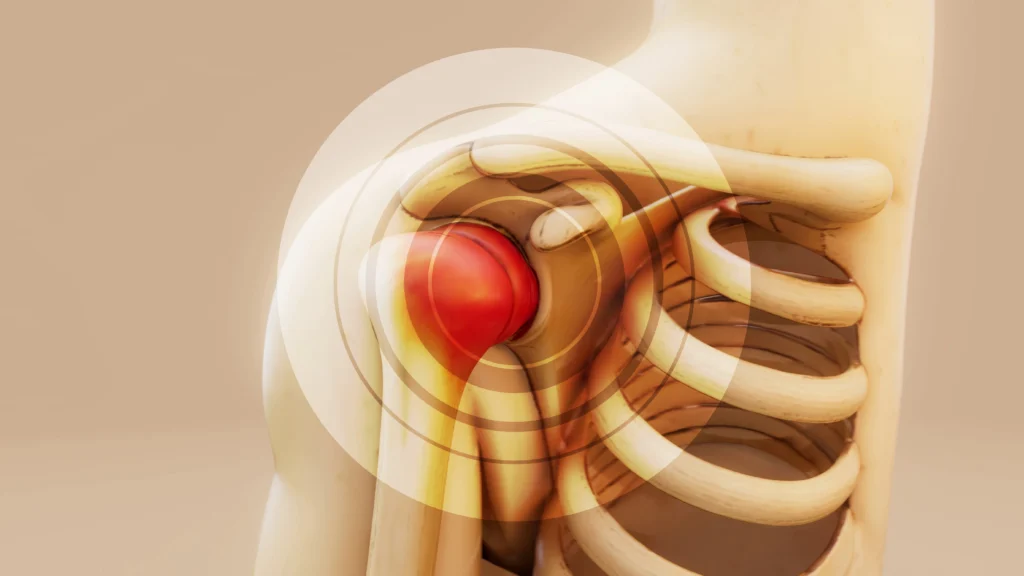
The shoulders are frequent targets of rheumatoid arthritis, and pain in this joint is often overlooked or attributed to other causes. Over time, inflammation from rheumatoid arthritis can quietly damage the structures of the shoulder, gradually interfering with comfort, strength, and mobility.
For patients who notice persistent shoulder discomfort and wonder whether rheumatoid arthritis may be involved, understanding what is happening inside the joint is an important first step. In this post, we’ll explain shoulder pain in rheumatoid arthritis, other symptoms that may appear, and the treatment options that patients may consider discussing with their care team.
Key Takeaways
- Rheumatoid arthritis primarily targets the synovial lining of the shoulder joint and can lead to damage of cartilage and bone over time.
- Symptoms may include deep joint pain, prolonged morning stiffness, swelling, and reduced range of motion.
- Treatment usually begins with rheumatology-directed disease management and may include injections and physical therapy.
- When joint damage becomes severe, shoulder replacement surgery may become an option for appropriate candidates.
What Is Rheumatoid Arthritis?
Rheumatoid arthritis (RA) is an autoimmune disease. The immune system, which ordinarily protects the body from infection, mistakenly targets its own healthy tissue. In RA, the primary focus of this misdirected attack is the synovium, the thin membrane that lines the inside of joints. This membrane becomes inflamed and thickened, produces excess joint fluid, and can gradually begin damaging nearby cartilage and bone.
RA is a systemic condition, meaning it can affect the entire body rather than just isolated joints. Fatigue, low-grade fever, and anemia may occur in some patients. But for most patients, joint pain, swelling, and stiffness remain the most disruptive day-to-day symptoms.
Unlike osteoarthritis, which develops through mechanical wear and tear, most often in older adults, RA can develop at almost any age. Women are diagnosed with RA more frequently than men. The course of the disease varies considerably, ranging from mild and manageable to progressive and disabling if left undertreated.
How Rheumatoid Arthritis Affects the Shoulder
The shoulder is one of the most complex joints in the body. It depends on the coordinated interaction of cartilage, bone, the rotator cuff, the joint capsule, and multiple supporting ligaments to function across a wide range of motion. When RA targets the shoulder, it typically begins with inflammation of the synovium, the joint’s inner lining, which thickens and produces excess fluid. The joint may feel swollen, warm, and deeply painful.
If inflammation is inadequately controlled over time, the inflamed synovial tissue may begin to erode cartilage and bone. The joint space can narrow. Bone erosions may develop at the joint margins, and the smooth surfaces that allow comfortable shoulder movement may become irregular and rough.
The rotator cuff, the group of four muscles and tendons that stabilize the shoulder and power arm movement, can also become involved. Some patients with long-standing RA may develop rotator cuff degeneration or partial or complete tears, which can contribute to increased pain and functional limitations. The acromioclavicular (AC) joint, where the collarbone meets the shoulder blade, may also be affected.
RA frequently affects joints on both sides of the body. One shoulder may feel noticeably worse than the other, but bilateral involvement is common enough that both shoulders should typically be considered during evaluation.
Recognizing the Symptoms
Shoulder pain in rheumatoid arthritis can present in a variety of ways, and the experience often differs considerably from one patient to the next. Pain is commonly described as deep, aching, and difficult to localize precisely. Some patients feel it mainly around the front or top of the shoulder. Others notice it radiating down the upper arm or into the neck.
Morning stiffness is a common feature of RA. Unlike the brief stiffness that often accompanies osteoarthritis and fades quickly with movement, RA-related stiffness may last 30 minutes or longer after waking before the joint loosens up. Prolonged morning stiffness is a symptom that doctors often consider when evaluating inflammatory joint conditions such as RA.
Other symptoms that may suggest RA involvement in the shoulder include:
- Visible swelling or puffiness around the shoulder joint
- Warmth or tenderness to the touch around the joint line
- A grinding, clicking, or catching sensation during shoulder movement
- Difficulty reaching overhead, across the body, or behind the back
- Arm weakness, particularly when the rotator cuff is affected
- Pain that disrupts sleep, especially when lying on the affected shoulder
RA symptoms frequently fluctuate. Patients may experience flares, periods of heightened inflammation, alternating with calmer periods of relative remission. Tracking how shoulder symptoms change over time, and whether they correlate with overall disease activity, can be useful information.
How RA-Related Shoulder Pain Is Diagnosed
Diagnosing shoulder pain in rheumatoid arthritis typically involves a combination of clinical assessment, imaging, and laboratory testing. A doctor will review the patient’s medical history, ask about the pattern and character of symptoms, and conduct a physical examination assessing range of motion, strength, and areas of tenderness.
X-rays may reveal joint space narrowing and bone erosions that suggest RA-related damage, though early-stage changes may not always be visible on a standard X-ray. MRI can provide more detailed information about the synovium, cartilage, and surrounding soft tissues, including the rotator cuff, and can be particularly valuable when the extent of damage is unclear.
Blood tests for rheumatoid factor (RF) and anti-cyclic citrullinated peptide (anti-CCP) antibodies are commonly ordered, along with inflammatory markers such as C-reactive protein (CRP) and erythrocyte sedimentation rate (ESR). These contribute important supporting information.
Non-Surgical Treatment Options
For most patients with shoulder pain in rheumatoid arthritis, treatment begins with managing the underlying autoimmune disease. This typically falls under the care of a rheumatologist, who may recommend disease-modifying antirheumatic drugs (DMARDs). Biologic agents targeting specific components of the immune response, including TNF inhibitors and IL-6 inhibitors, may also be prescribed when conventional DMARDs have not provided adequate control.
When systemic treatment alone is not fully controlling shoulder symptoms, additional approaches may help:
- Corticosteroid injections into the shoulder joint may reduce local inflammation and provide meaningful, though often temporary, pain relief
- Physical therapy may help preserve range of motion and strengthen the muscles that support the shoulder
- NSAIDs may reduce day-to-day pain and inflammation when medically appropriate
- Activity modification and ergonomic adjustments can reduce unnecessary stress on the shoulder during daily tasks
The effectiveness of these approaches varies among patients, and treatment often requires adjustment as the disease evolves. Regular follow-up helps ensure the treatment plan stays aligned with the patient’s current needs.
When Surgery May Become an Option
Some patients with RA develop progressive joint destruction despite appropriate disease management and non-surgical care. When shoulder pain becomes severe, daily function is substantially limited, and imaging confirms significant structural damage, surgical options may become a meaningful part of the conversation.
Total Shoulder Replacement for RA
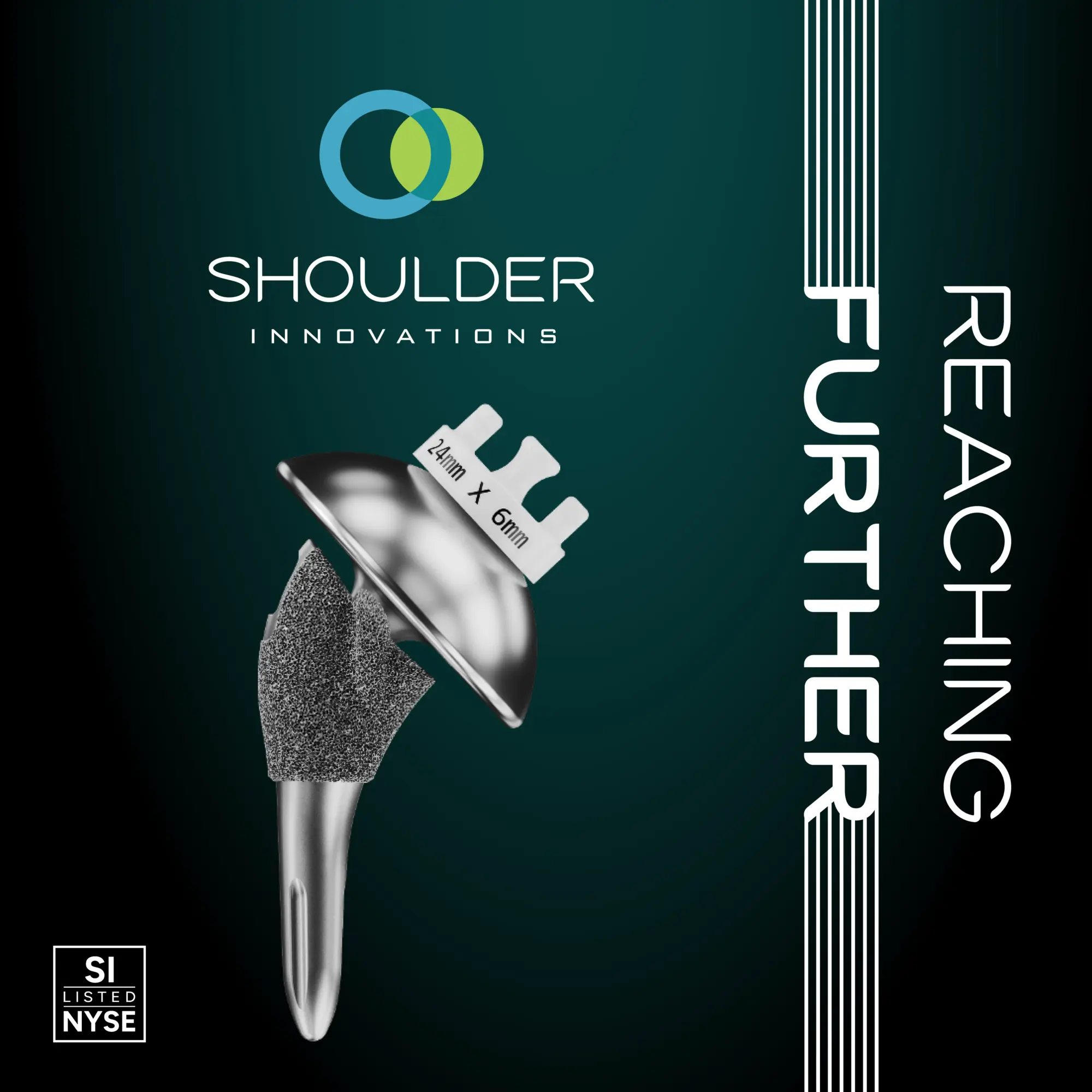
In a total shoulder replacement, the damaged joint surfaces are replaced with prosthetic components designed to replicate natural shoulder mechanics. The ball at the top of the upper arm bone (humerus) is replaced with a metal ball attached to a stem, and the socket (glenoid) is resurfaced with a smooth plastic component. This approach is typically most suitable for patients whose rotator cuff remains intact and functional.
The quality of surrounding bone, rotator cuff integrity, and overall patient health all play a role in determining candidacy and likely results. A consultation with an experienced shoulder specialist is an appropriate starting point for understanding whether this procedure may be a good fit.
Reverse Shoulder Replacement for RA
When RA has caused both significant joint destruction and rotator cuff damage, a reverse shoulder replacement may be the more appropriate surgical option. This procedure reverses the ball-and-socket orientation of the joint: a metal ball is attached to the shoulder blade (scapula), and the socket component is placed on the upper arm bone. This design allows the deltoid muscle to take over the functions that a damaged rotator cuff can no longer perform reliably.
Reverse shoulder replacement has become increasingly common for patients with complex shoulder conditions, including those related to rheumatoid arthritis. For appropriately selected patients, it may provide substantial pain relief and meaningful functional improvement. As with any surgical decision, a thorough evaluation is essential to determine whether the anticipated benefits are appropriate for a given patient’s situation.
Coordinating Care Between Specialists
One important nuance in surgical planning for patients with RA is medication management. Many patients take biologic agents or other immunosuppressive medications that may need to be temporarily adjusted or paused before and after surgery to reduce the risk of postoperative infection. This requires careful coordination between the rheumatologist and the orthopedic surgeon, ideally beginning well in advance of any planned procedure. Open communication across the care team, combined with an engaged and informed patient, can help support safe surgical planning and recovery.
Summary
Shoulder pain in rheumatoid arthritis is a challenge that can significantly affect daily life. RA targets the synovial lining of the shoulder joint, potentially causing progressive damage to cartilage, bone, and the rotator cuff. Symptoms may include deep joint pain, prolonged morning stiffness, swelling, and restricted range of motion. Diagnosis relies on physical examination, imaging, and blood tests. Treatment usually begins with disease-modifying medications, supported by injections and physical therapy. When joint damage becomes severe, shoulder replacement surgery, either total or reverse, may be considered for appropriate candidates.
Frequently Asked Questions
Can patients with rheumatoid arthritis have shoulder replacement surgery?
In some cases, both total shoulder replacement and reverse shoulder replacement may be considered for patients with RA who have developed significant joint damage that has not responded adequately to non-surgical care. Outcomes vary depending on the degree of joint destruction, bone quality, and rotator cuff integrity. A consultation with a shoulder specialist is the best way to determine whether surgery may be a good option for a specific patient.
Will RA medications help with my shoulder pain?
Disease-modifying medications used to treat RA may reduce systemic inflammation and have a positive effect on the shoulder. However, the degree of benefit varies among patients. Some continue to experience shoulder symptoms even when overall disease activity is relatively well-controlled.
When should I see a shoulder specialist about RA-related shoulder pain?
It may be helpful to consult a shoulder specialist if shoulder pain is interfering with daily activities, if imaging suggests structural joint damage, or if symptoms are not improving with rheumatology-directed care. A shoulder specialist can assess the extent of joint involvement and help determine whether surgical intervention may be worth considering.